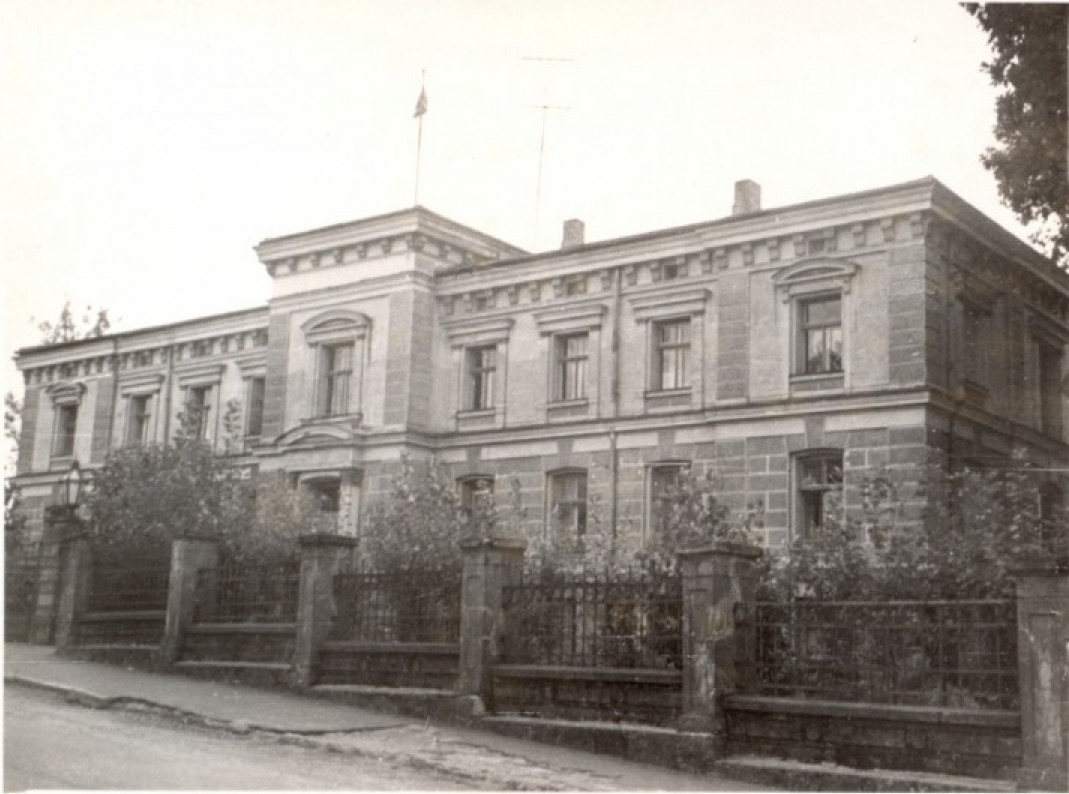
Construction of the Cēsis power station, or "steam central" as it was initially called, began in 1911 and was up and running by 1912. The heart of the power station consisted of two LANZ steam lokomobiles with 45 kW and 30 kW capacity, which used belt drives to power AEG company's 440 V direct current 80 A and 60 A generators. The generators mainly ran during daylight hours, but after 11 PM, the power grid was switched to an additional battery system.
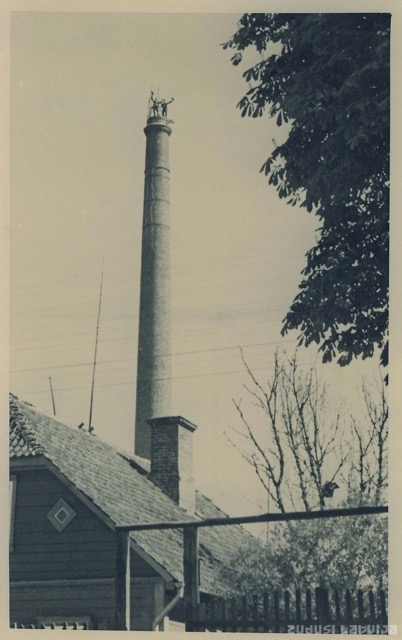
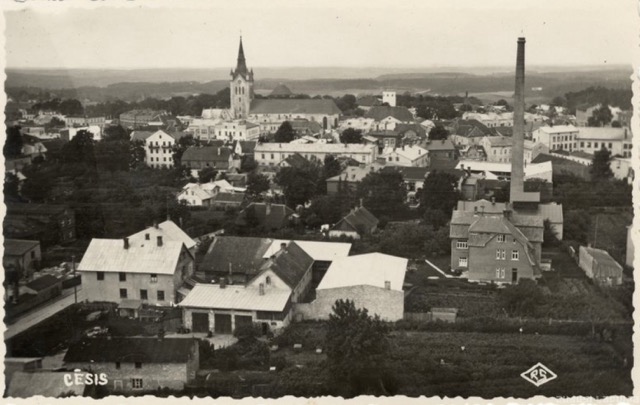
In 1917-1918, a new feature was added to the power station's silhouette – a 45-meter high brick chimney that replaced the earlier sheet metal chimney and became one of the city's landmarks. At this time, the power station served around 300 customers, with electricity primarily used for lighting. The total length of the electrical network reached 7 kilometers, mainly serving the city center.
The first power station employees were engineer Helmanis, technician Kalniņš, electrician Grāvelis, and the 16-year-old apprentice Voldemārs Blūms. Special mention goes to Mr. Blūms, who worked at the power station for almost his entire life – 72 years (until 1987). He witnessed all the changes at the power station.
In the twenties, the rapidly growing demand for electricity led the Cēsis city board to decide to build a hydroelectric power station on the Amata river at Kārļi mill. In 1925, the Amata hydroelectric power station began producing energy and was connected to the city with a 6 kV transmission line. By then, Cēsis already had a 17-kilometer long high-voltage network and approximately 880 customers
In 1929, the Amata and Brasla hydroelectric power stations started working in a common power grid, eliminating the electricity shortage in Cēsis. However, the Cēsis central station continued to operate in the direct current power grid, and only in 1930 was the conversion to alternating current completed.
The modernization of the Cēsis power station continued in 1932, when a major reconstruction began. The old lokomobiles and all direct current equipment were dismantled and replaced with a Linke-Hofmann-Busch-Werke diesel engine connected to an AEG 6 kV alternating current generator and an ASEA-manufactured 6/20 kV transformer. The generated electricity was fed into the 20 kV power grid.
The reconstruction lasted until 1934 under the leadership of Edgars Jurevičs, an electrical engineer and head of the Cēsis city electricity company. During this time, many innovations were introduced, such as a water cooling tower and reservoir system for cooling diesel engines, and a gravity-operated pipeline for delivering diesel fuel from tanks at the railway station to the power station.
1939. In 1939, the Ķegums power station began operation, becoming the foundation for creating a unified energy system in Latvia with the establishment of the State Electricity Enterprise (VEU) "Ķegums." The new energy company's task was to produce and distribute electricity throughout Latvia. In 1940, the VEU "Ķegums" Cēsis district was established based on the Cēsis city electricity company.
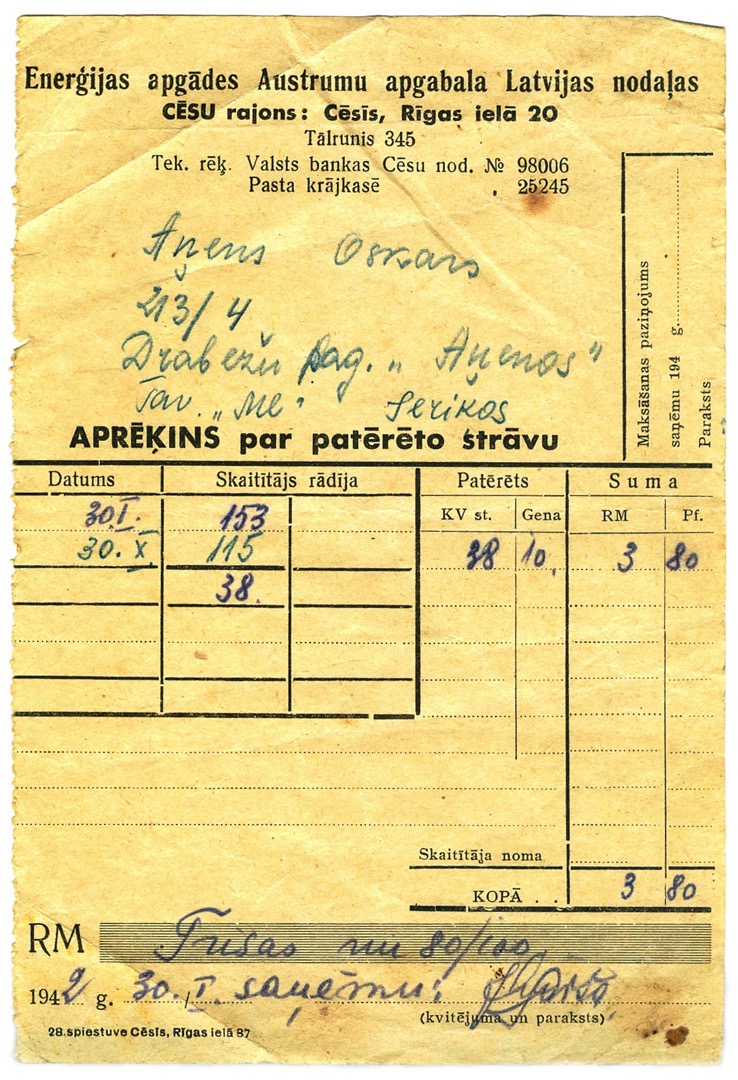
As the German occupation forces retreated, many electrical facilities in Latvia were destroyed, with restoration beginning in September 1944. In the VEU "Ķegums" Cēsis district, power supply restoration began immediately after the front line moved away. Under the leadership of company employees J. Kuzmins and A. Oškalns, priority was given to restoring the high-voltage line connecting Cēsis with the Amata and Brasla hydroelectric power stations. After just one week, electricity was provided to the most important consumers in Cēsis during morning and evening hours.
The repair of the Cēsis power station's diesel engine required longer restoration work. It was put in working order and started only at the beginning of November. However, its operation was very limited due to fuel shortages. After using up the remaining fuel in the tanks, fuel was only available from military units.
Hoping to cover the electricity deficit, Cēsis energy district employees also helped restore the Līgatne paper factory power station (3000 kVA). However, this was only partially successful. Although the Līgatne power station was incorporated as a local system base station, its capacity was mainly needed for the Līgatne paper factory and could only help other consumers to a small extent.
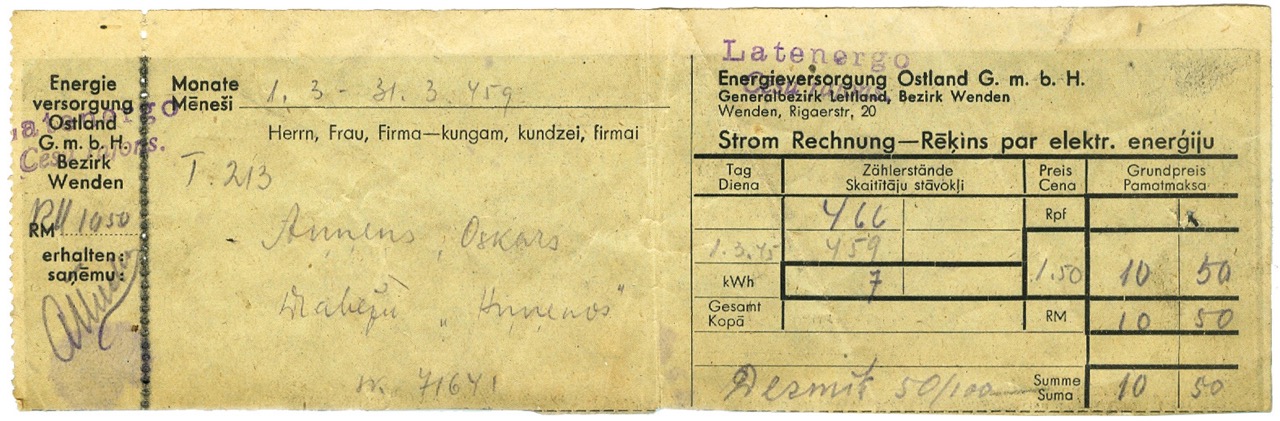
1946. In the autumn of 1946, after the restoration of the Ieriķi 80/20 kV substation, the Cēsis and Valmiera power grids were connected to the common republic energy system. Although the permitted capacity of 1000 kW was far from satisfying the total needs, it still made it possible to significantly expand the number of consumers. At the end of that same year, the Valmiera and Cēsis electricity companies were merged to form the USSR Ministry of Power Stations district administration LATENERGO Valmiera energy district with its center in Valmiera.
The story of the Cēsis power station ended in 1949 due to broken connecting rod bolts in the diesel engine. The damage was serious, and it was decided not to restore it since the Cēsis power grid was already connected to the common republic energy system. From 1962 to 1988, the Cēsis power station building (partially demolished and rebuilt) housed the administration of the Cēsis network district, which was previously located at 20 Rīgas Street.
The materials used for the description are:
Energy Museum Collection
Book "Northern Electric Networks 60. 1940-2000", edited by Ilgvars Staltmanis, 2000 Latvian Energy System History 4th Conference Report: Collection of Articles / Edited by Ilgvars Staltmanis.
Cēsis Museum and Latvian National Library collections